I may have finally fixed the issue with the car. The new exhaust didn’t really make the car feel any faster. Today I checked the base timing and found it was 17 degrees at idle when the ECU wanted 22. I advanced it accordingly and the car seems to be driving a little better. It’s very hard to test it on the road without being a lout, but it seems to come on boost stronger with better top end.

The process wasn’t without intricacies. The very old Check /Advance Timing page has been updated and renamed with the procedure documented.

Next mods will be smaller, with a Taarks power steering pump bracket waiting to go. This will move the pump down to where the air con compressor used to be. I also have a bunch of small parts ready to fit, like the solid steering column bush and eccentric throttle wheel. I recently purchased a smaller torque wrench, to tackle the install of the GKTech rocker arm stoppers. This one is worthy of its own page, even though it is meant to be a simple task.

Recently I purchased some ATV jacks from Supercheap Auto. They are designed to lift quad bikes up to 680 kg each, using a hydraulic jack with foot pedal control and safety locking pins. I figured They would fit quite nicely under the wheels of the car. I purchased two and sure enough, they function very well. Ramps are needed to drive the car up onto the. I have worked the best starting position and painted some alignment guides on the garage floor for future work. The best part is they lift the car over 300 mm, compared to around 200 mm for drive on ramps. In future I will purchase two more so the back can be lifted at once, almost like a mini hoist.

This morning I managed to fit the Varex muffler after picking it up late yesterday afternoon. It needed some minor attention, in the way of grinding some of the internal welds on the flange that was joined to the existing exhaust, and shortening some bolts so they would clear the bends of the exhaust. One of the hangers is too long, but overall it still sits clear of everything. Most importantly, the mechanism that controls the the internal butterfly clear the underside of the car by around 10 mm in the closest place.

The following video shows the system working off the car:

On the car, the results are amazing. With the valve closed, the exhaust is as quiet as stock. You can still hear the turbo whistling and fluttering when the throttle is closed, but no real noise from the back. With it open, it sounds like any other straight through cannon.

I opted for the 3.5 inch internal diameter model to offset the small restriction of the butterfly valve sitting in the exhaust stream. The old muffler was only 2 inches internal diameter, so the new one represents an increase of area in cross section of more than double. Yet to drive it in anger but fingers crossed it frees up the power of the engine. Realistically, it won’t make a huge difference but I hope to be pleasantly surprised.


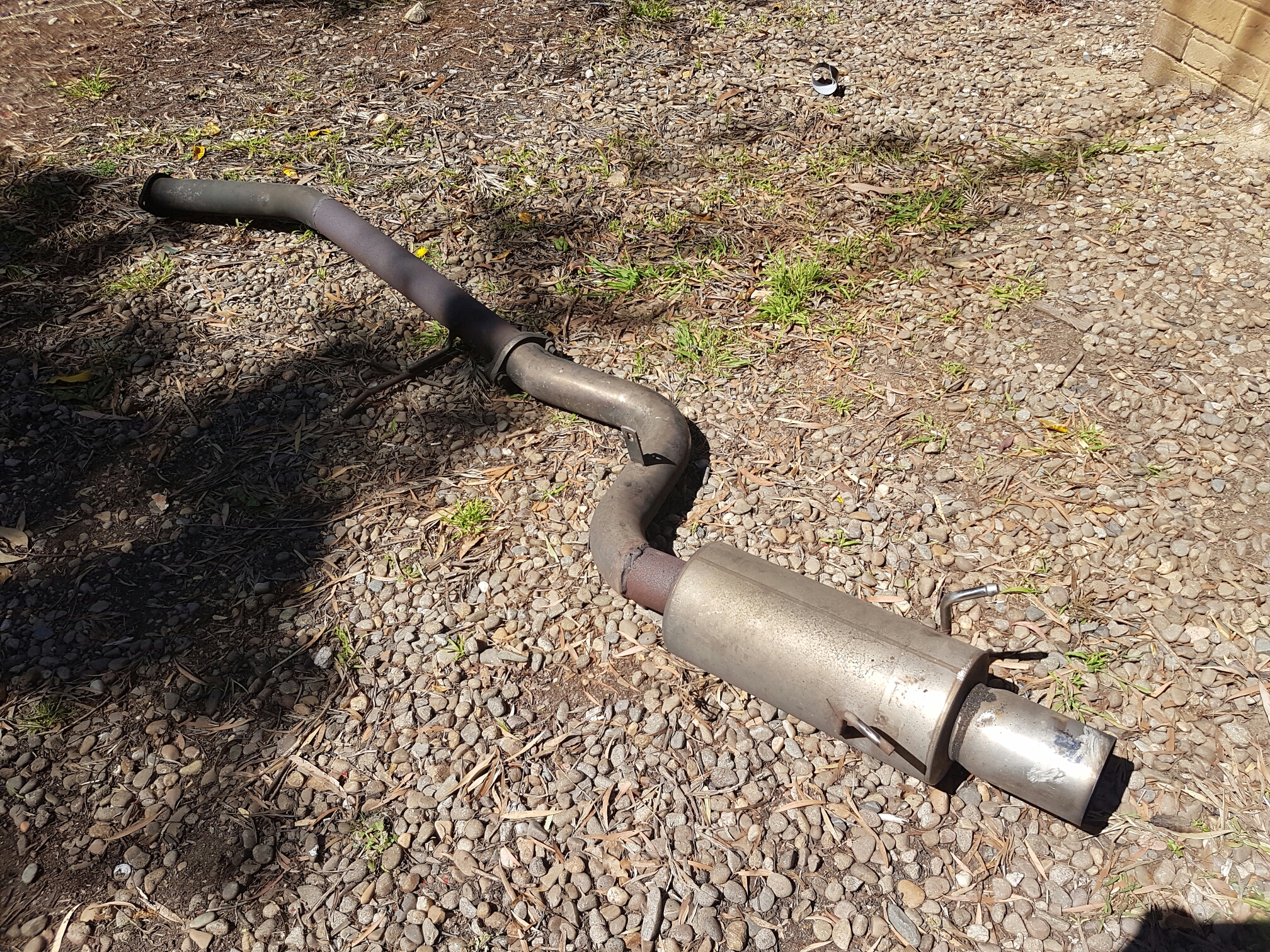
I have dropped off the rear section of the exhaust to Penrith Muffler Man, who are the closest dealer for Varex mufflers. The dodgy section of pipe will be replaced with a flange leading into a 3.5 inch Varex. This size should ensure zero restriction on the track and quiet for when I don’t want to annoy the neighbours.

The job is a bit tricky without the car there because the mechanism for the muffler needs to be factored in. I’m hoping a detailed conversation and a series of pics will do the job.

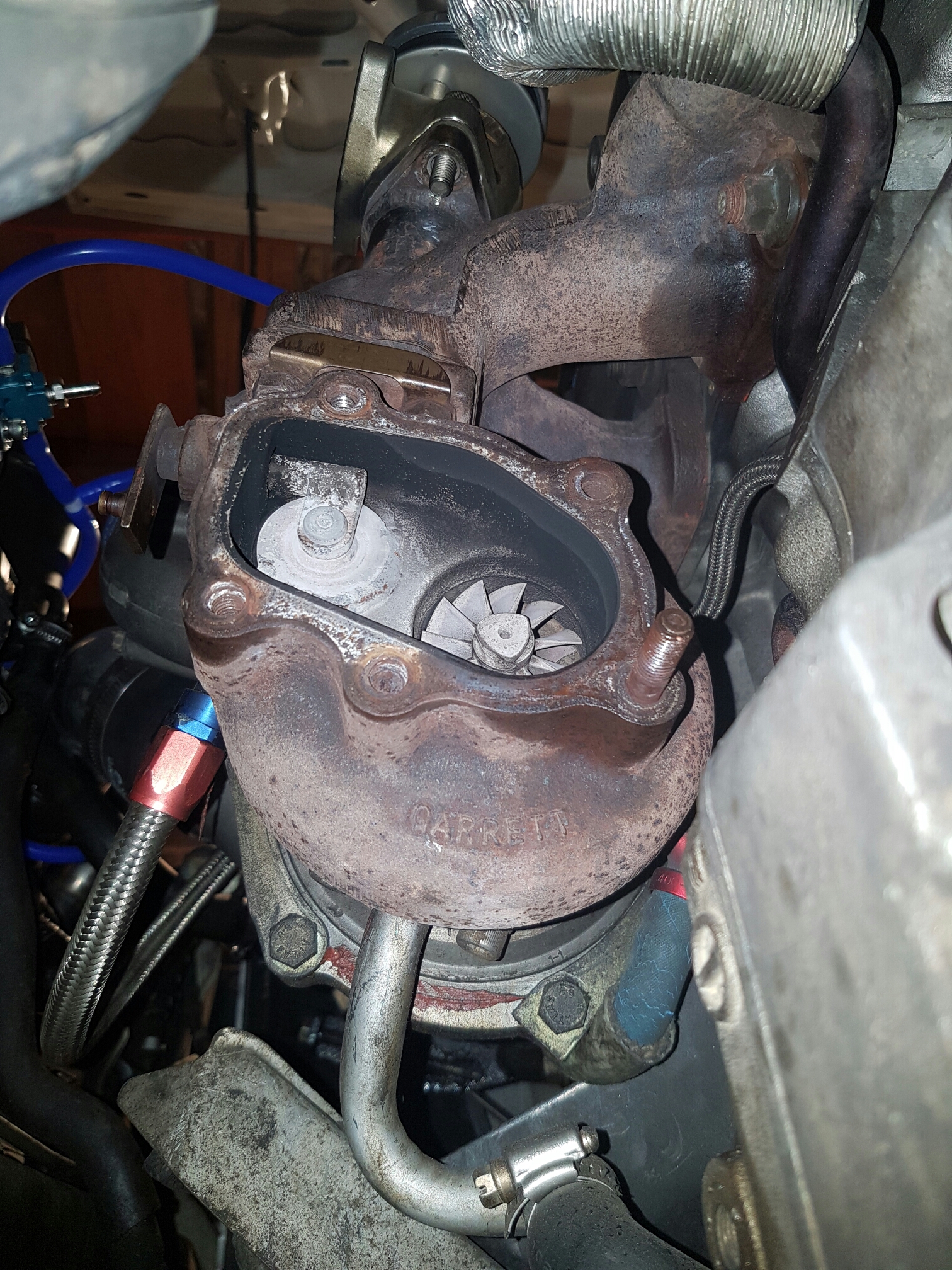
In the meantime, I’ve taken the dump pipe off the car to inspect it and the back of the turbo. The internal wastegate is welded shut and one of the turbo to dump bolts is snapped off inside the turbine housing.

The dump had two small holes on the wastegate pipe which I welded up.

I had forgotten just how annoying it is to remove the dump pipe. On this car it is even harder because the external wastegate pipe is in the way. Ideally, this pipe would be in two pieces.

Tomorrow the new muffler will be ready and we’ll see if the engine power improves.

I have pulled off the exhaust and there is no blockage. The muffler is the only part less than 75mm, where it drops to around 50mm.

I am planning to have the muffler replaced from the slightly smaller, rustier section just behind the muffler. I would still like a 3.5 inch Varex muffler, but we’ll see what the local supplier has in stock.

If the new muffler doesn’t free up the engine then it’s back to the drawing board. The dump pipe looks ok. I’m not that keen to pull it off without good reason.

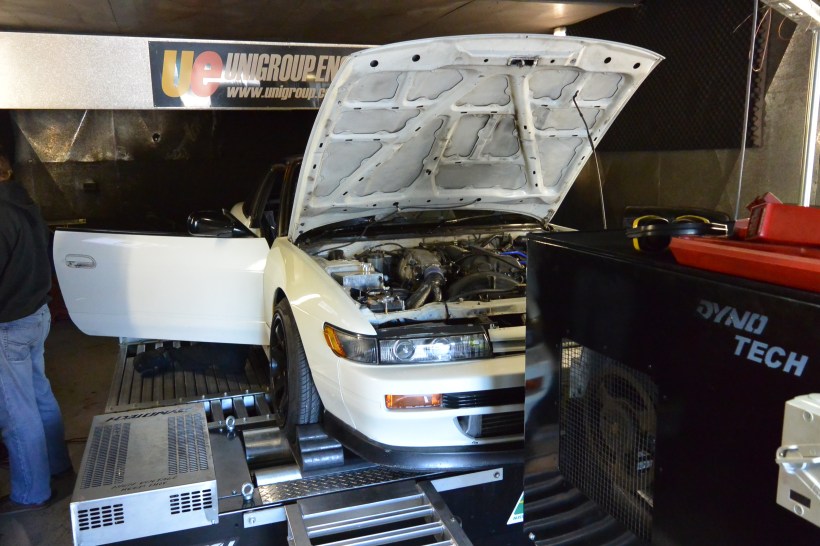
Dyno run has been and gone. Unigroup were just as friendly and helpful as I remember.
dsc_1671

I took down my laptop and consult port cable to watch the ECU function in real time using Nistune. The alarm installer had pushed the consult plug way out of the way, to the point where I thought it had been removed. Paul from Unigroup fished around the fuse box and found it. He connected my laptop and away we went.

wp-1475279239756.jpg

It was fascinating to watch the fuel and timing maps being traced in real time. He immediately commented on the roughness of the tune, especially in the way the constants had been tweaked to accommodate the changes in air flow meter and injectors. He added some fuel to the transition onto boost and then performed the first power run. The car made 169.6 rwkw, well short of the 215 rwkw claimed on the dyno graph that came with the car. Paul advanced the ignition timing by 2 degrees, which netted a 8 rwkw gain. At that point the motor started to detonate with further power runs not gaining any increase in power. Paul cited some sort of heat soak. The timing was returned to the original setting and the job was done.

michael_s13

A lot of fruitful conversation took place around the reasons for the car under performing. Roland detected an exhaust leak around the turbo, however this was not necessarily to blame. They gave me some T28 manifold to turbo and turbo to dump gaskets to fix the problem.

Paul seems adamant there is an exhaust restriction, in the form of a blocked cat or similar. Given the size of the FMIC, heat soak shouldn’t have been a factor in the intake system. Therefore it must be coming from the exhaust side. I will be checking for blockages today with the hope of finding something obvious and a bunch of power being restored. Paul also pointed out that the cannon muffler was only 2 inches or so through the centre, which wouldn’t be helping matters much. I am planning to have the rear section of the piping replaced (from near the diff) with 3.5 inch pipe and a Varex muffler. This will allow the car to sound very quiet if the need arises and still have great power at the track.

Paul also thinks the car might have aftermarket cams, judging by the the lumpy idle. This would account for the lack of response down low. If the car was once making 215 rwkw with the current turbo, then having cams makes this more realistic. It may be hard to verify the cams, but I am planning to pull the rocker cover off and fit rocker arm stoppers at some stage.

Paul thinks the injectors are larger than stock but possibly only high flowed. He recommends changing to an off the shelf larger item. 555 cc if available or 740 cc if not. This should help the running by atomising the fuel mixture correctly.

An S14 or S15 T28 should be able to make over 200 rwkw with my current supporting mods. 170 rwkw is definitely too low. My grey 180 exceeded this years ago with a standard afm and T25G turbo. The best case scenario is I find something obviously wrong with the exhaust and the car comes to life. If the exhaust is fine, then it’s time for head scratching.

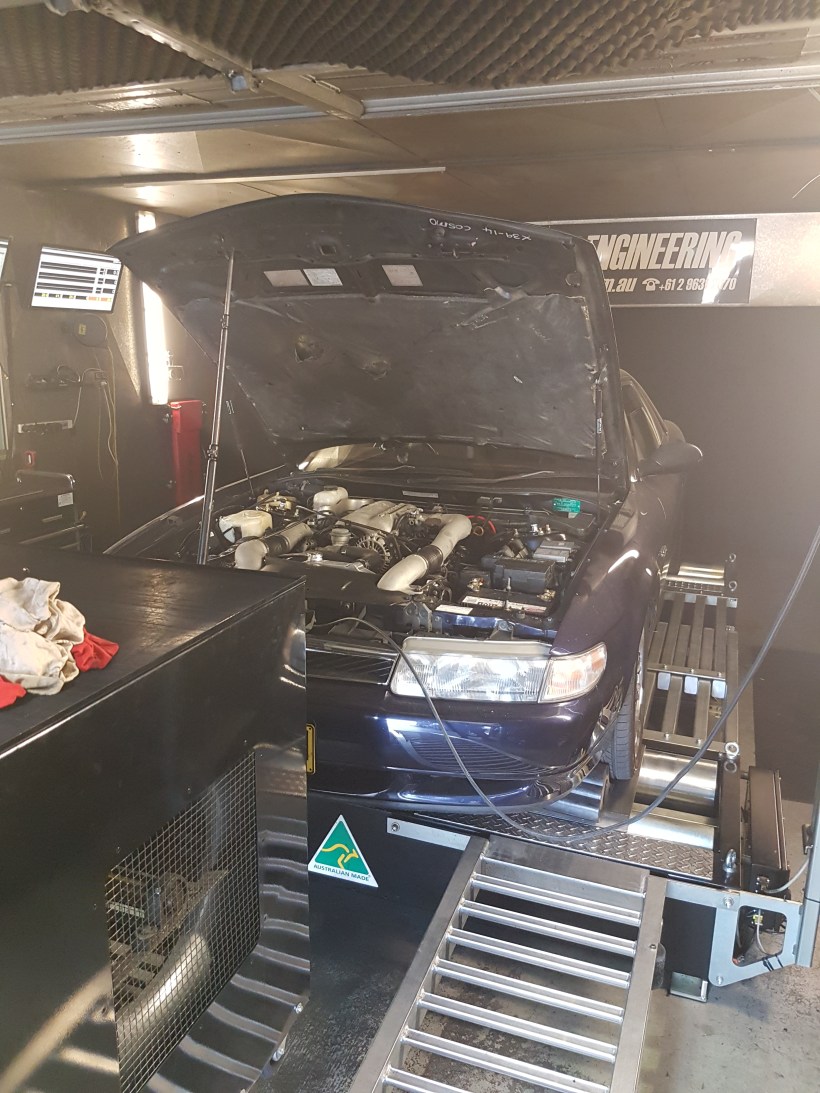
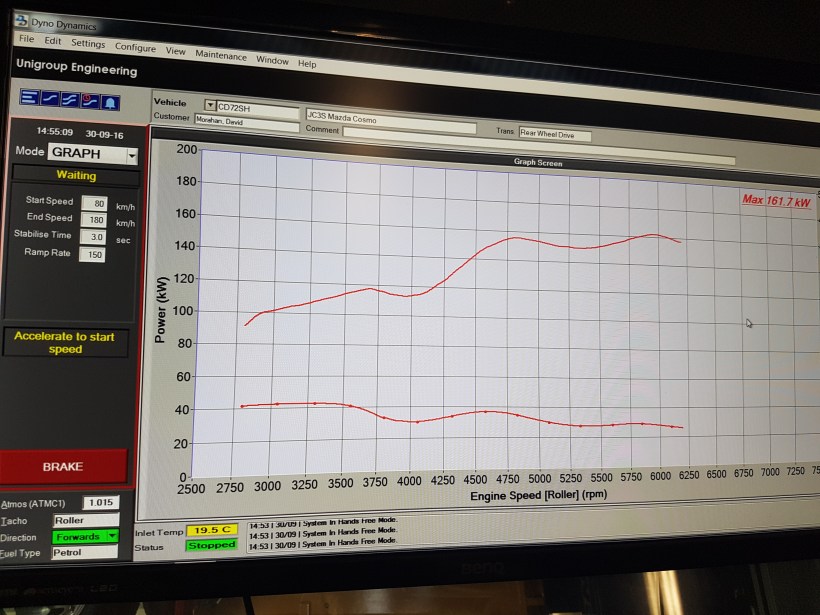
My friend Dave (driftdave) accompanied me to Unigroup. He has recently purchased back his 20B Cosmo which he owned 5-10 years ago. It’s mechanically stock and put out a respectable 161.7 rwkw.
wp-1475280547057.jpg

The power and boost curves are all over the place. This is partly to do with the transition between the two turbos not quite functioning properly. He also has a problematic leak in the exhaust manifold. The car will make a lot more power with basic mods like an exhaust and larger intercooler. The trouble is the factory ECU tries to fight the changes, yet must be retained to run the dash, transmission, air con, etc. He will need to splice in an aftermarket computer just to run the fuel and timing. After this the car will pump out big numbers with the standard twins. Exciting times ahead.
wp-1475280557740.jpg


Last night was so much fun! I was expecting a 13.7 and hoping for a 13.5. At the start of the night those targets seemed out of range.

My first run was a 14.250 @ 104 mph. I had a huge amount of wheel spin and axle tramp off the line, and then a lot of wheel spin into second gear. I also did my burnout too early to the ire of the officials. Put the whole thing down to newbie nerves.

Run number two suffered from bog down off the line. The shift into second was better and the pass was an improvement at 14.122 @ 106.68 mph.

The third pass still had some bog down but not as bad. 60 ft time came down a tad and the time improved greatly to 13.684 @ 106.97 mph. I was fairly happy with that so anything after was a bonus.

For my final pass I turned up the boost a tad. The launch had wheel spin and axle tramp but still produced my quickest 60 ft time of the night. Second gear onward was great and the ET was 13.412 @ 107.23 mph. Under my goal and big smiles delivered.

The trap speed didn’t rise much so the extra boost isn’t necessarily delivering any extra power. We will find out that for sure at Unigroup on Friday.

I used the G-Tech Pro with mixed success. At first I couldn’t get it to recognise the stationary car to enter staged mode. The first two runs didn’t work. For the third and fourth I worked out that tapping it with my hand would trigger what was required and the unit started timing when it was meant to. The third run read about 2 tenths too quick, so I shortened the roll out parameter. The fourth pass was only a tenth out. Shortening it further should make it quite accurate. A good purchase for $80 second hand. Unfortunately I forgot the save the last pass but I can still go through the data for the third.

I still think the car has more in it without further alterations. A better launch should get it to the low 13s. Keep in mind it was on the track in the exact condition I drove it down. Many cars were towed or had slicks. I like the fact that mine was run as a true street car.

I’ve asked Unigroup about booking in a tune on Friday instead of just the dyno run. The car is laggier than it should be, running quite rich. A leaner mixture and advanced timing should see the power and driveability improve. We’ll see how long it is until they can tune the car.

I filmed the drag racing in 360 degrees with my new VR camera. Upload to follow.


A very productive day! I started by ripping out the rest of the rear interior. The car was purchased with only one rear seat belt, which looked like the original Japanese item. This means something very dodgy has happened at compliance, where they are all meant to be replaced. I had no trouble discarding it. The rear parcel shelf was the heaviest item, with large 6×9 inch speakers. I also removed the bracket that holds the factory jack, and the brackets that hold the factory rear speakers. All of the discarded items are seen here, along with the barer rear of the car:

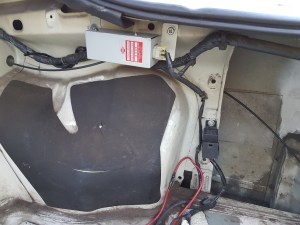
Take care when removing the driver side rear speaker bracket. There is an electric module that Google told me runs the fuel pump. Sure enough, with it disconnected the car wouldn’t start. I mounted it and the fuel pump relay a previous owner had installed on a empty piece of the frame:

wp-1474958546875.jpg

Everything from the rear weighed in at 24 kg, which is significant enough. The road noise is louder in the cabin, but there are some loose parts vibrating and some open holes which are contributing to this. I will attend to them at a later date.

Next up I jacked up the front of the car and increased the front ride height by 15 mm. Provided you have a C spanner, this is a really quick and easy job. The car is pretty driveable in terms of clearance, but I’m after the most hassle free experience. There was a broken bolt in one of the camber tops, which I disassembled, drilled out and replaced. Piece of mind there.

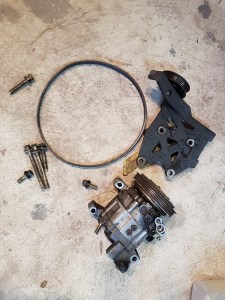
The car was purchased with the air conditioning disconnected. The compressor was still on the side of the engine, but no condenser or piping was to be found. I’m not sure if the AC components were removed from underneath the dash. If the car had working air con I would keep it, but as it stands I have no intention of getting it working. I therefore removed the compressor and bracket from the side of the block, saving another 10 kg!

wp-1474958554264.jpg

While I was down there, it was obvious a fairly major oil leak had occurred behind the compressor. I couldn’t find a source for the leak but it is easy to suggest the turbo oil lines could have leaked in this location in the past. I degreased and wiped the whole thing down. It’s not perfect but it should now pass scrutineering at WSID. Time will tell if there is a active leak when I check back for fresh oil later on.

Finally, I installed my GKTech brake master cylinder stopper which came in the mail last week. This improves brake pedal feel by preventing firewall flex. I’ve documented the install on the S13 Brake Upgrade(s) page. The car is driving well with its 34 kg  diet and is now ready for tomorrow night. If I have time tomorrow, I may install the fire extinguisher too.

It’s going to be a big week for the Sileighty. On Wednesday night I plan to drive it in the off street drag meet at WSID. In the past, I took the near stock green 180 to Eastern Creek and ran in the 15s, slower than stock. Cheap rear tyres and an inability to launch the car made for embarrassing results.

This time I hope to improve greatly. This car has much better tyres and more power. Today I finally got the g-tech Pro working after Frankensteining together a new suction cup mount to replace the DOA original one. Completing the calibrations and setup was quite involved, but it seems to working well now.

Some low key testing with a passenger on a deserted, flat and high speed limit road saw consistent 0-100 km/h times of 5.7 seconds. Putting the numbers into an online calculator gives a predicted mid/high 13 second quarter mile.

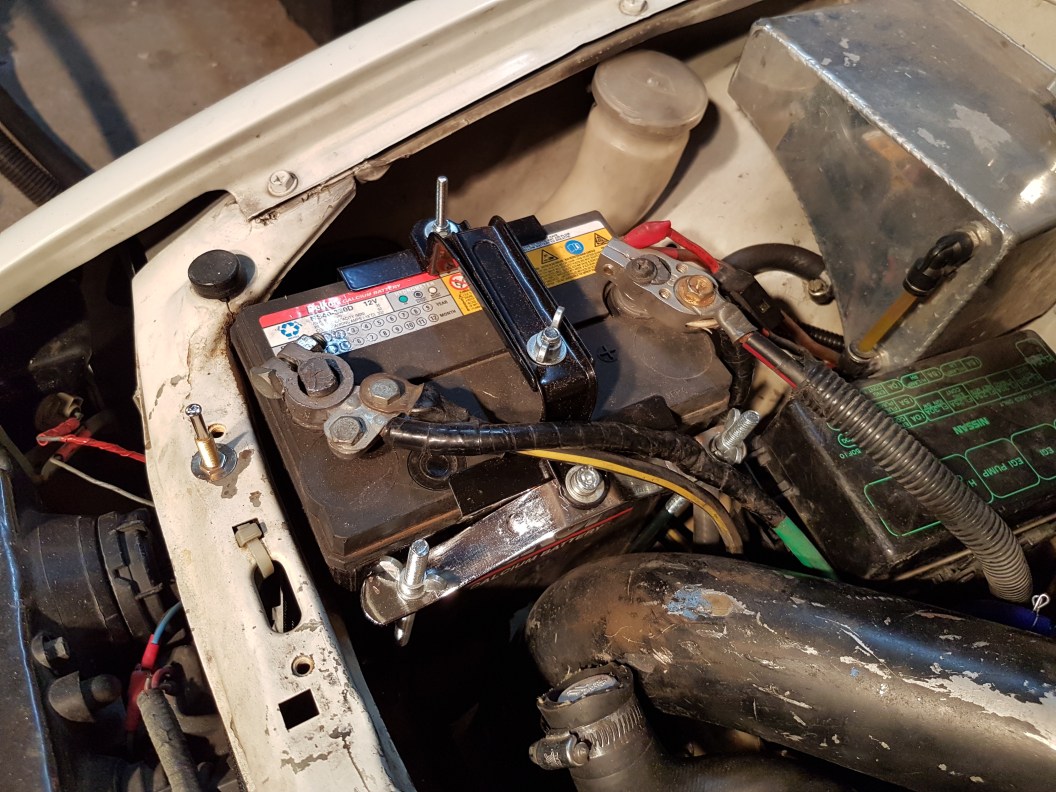
Today I installed a battery strap to hold the thing in place. This was completely missing from the car upon purchase.

I had to fabricate a custom bracket to clear the intercooler piping and anchor into the butchered original battery tray.

Tomorrow I plan to shed some weight in the form of the rear interior pieces, which are hardly attached. If I have time, I will remove the disconnected air con pump and raise the front ride height a touch. There is also a fire extinguisher to mount, although this is not required for WSID.

On Wednesday night I’ll run the g-tech to test its accuracy, as well as a new 360 degree camera that arrived today.

On Friday, the car is booked in for a dyno run at Unigroup. I’ll see how the tune looks and wind in some boost to see the effect on power. I can’t wait.

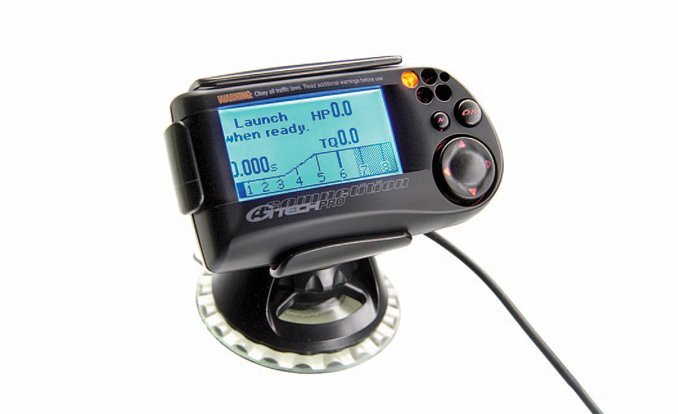
Remember those old things called G-tech Pros? They stuck to your windscreen, and powered by the cigarette lighter socket, measured the g-forces of acceleration to tell you 0-100 km/h and quarter mile times. I have just purchased one second hand from Gumtree.

The newest models have high frequency GPS to help the accelerometer with accuracy. I found it impossible to find one for sale in Australia. Instead I have an older Pro Competition model as reviewed here. The review in that article is pretty glowing, I’m hoping I agree.

do-inexpensive-performance-meters-work-inline-5-photo-453092-s-original
http://media.caranddriver.com/images/media/51/do-inexpensive-performance-meters-work-inline-5-photo-453092-s-original.jpg

Should be a nice toy. The important thing to remember is that while the accuracy might not be perfect, using it as a back to back test for mods is very valid. The pure g-force peak reading is valuable in terms of increased power. When I take the car drag racing, I’ll be sure to have it recording to test the accuracy.

On holidays in a week and a bit. The plan is to get the car on the dyno, hopefully with the new sump and oil cooler in place.

Sometimes I am an idiot. I have finally solved the electronic boost controller issue, and the problem was me. By default, the Turbosmart eboost has an overboost limit of 7 psi. When my external wastegate is running 14.7psi on spring tension alone, it means that any time the ebc detects over 7psi, it tries to reduce pressure back to 7 psi, which it is unable to do.

Changing the overboost limit to 20 psi had the controller working as it should. I’ve settled on 16.5 psi at the moment, with the settings as aggressive as possible without inducing a boost spike. This has reduced wastegate creep and the low/mid end torque has improved so very much.

Since I’ve owned the car, I’ve identified and fixed a wastegate leak, BOV leak, non connected VTC and incorrectly set ebc. The difference is night and day. Today I found a vacuum line connected incorrectly which is giving the car a high and lumpy idle. An easy fix for improved running I’m sure.

All of this means that car is ready for a run on the dyno. I don’t think it will hit the 215 rwkw as printed on the sheet that came with the car, but it will be respectable nonetheless.

Next planned mods are fitment of the oil filter relocation block and oil cooler that has been sitting on the floor in the house for a while. A new page detailing this will follow.